

AnyRoR Gujarat 2026: Instantly Check 7/12 Utara & Download Digitally Signed Property Card Online.
AnyRoR Gujarat is the official land records portal of the Gujarat government, managed by the Revenue Department. Through this website, land records across the state are made accessible online so people do not have to depend on middlemen or make repeated visits to government offices.
On this portal, important records such as 7/12, 8A, and 6 entries can be viewed easily. Details related to survey numbers, ownership names, mutation updates (land changes), and agricultural land information are also provided in one place. Both rural and urban land records are made available, and digitally signed RoR copies can also be accessed when needed.
This system has been created to make land information transparent and simple to check. Farmers, landowners, and property buyers are given a convenient way to verify land details from their homes. Time, travel, and unnecessary expenses are saved because the records are now maintained and shared digitally by the government.
AnyRoR Gujarat – Official Land Record Portal | Revenue Department
AnyRoR (Any RoR @ Anywhere) is the official online land record portal managed by the Revenue Department, Government of Gujarat. This platform allows citizens to check land records online from anywhere without visiting government offices.
Through this portal, users can access both rural and urban land records easily. Important documents such as 7/12 Utara (Satbara), 8A Khata details, VF-6 mutation entries, and property cards are available in one place. The system works as a secure digital database where land ownership details, survey numbers, and mutation updates are maintained safely and can be viewed anytime.
What Is AnyRoR Gujarat? and How It Works.
AnyRoR Gujarat means Any Record of Rights Anywhere in Gujarat. It is the official land records website started by the Revenue Department, Government of Gujarat. This online portal allows people to check land records from anywhere without visiting government offices.
The portal gives access to both rural and urban land records. It works as a complete digital system where land ownership and survey details are stored safely and can be checked anytime.
What You Can Check on AnyRoR Gujarat
- 7/12 Utara (Satbara)
- 8A Khata details
- VF-6 mutation entries
- Property card details
- Digitally signed RoR (Record of Rights)
Farmers can check the 7/12 Utara (Satbara) online to view ownership, crop details, and land cultivation information. Learn how to view it step‑by‑step in our 7/12 Utara guide.
Who Can Use the AnyRoR Portal?
AnyRoR is designed for public use and does not require special permission for basic record viewing.
Common users include:
- Farmers checking 7/12 Utara and agricultural land details
- Property buyers verifying land ownership before purchase
- Property sellers confirming clean land records
- Lawyers handling land and property-related cases
- Citizens checking family or ancestral property records
For viewing records, no login or registration is required.
Types of Land & Property Records Available on AnyRoR
The AnyRoR Gujarat portal provides different types of land and property records that help landowners, buyers, and farmers easily verify ownership and property details. Below is a simple explanation of the main land records and services available on the portal.
| Land Record Type | Gujarati Term | Purpose / Use Case |
|---|---|---|
| 7/12 Utara | સાત બાર ઉતારો | Shows ownership, cultivation details, crop information, and loan status |
| VF-6 | એન્ટ્રી વિગત | Used for mutation entry when ownership changes |
| VF-7 | સર્વે નંબર વિગતો | Survey number-wise land details |
| VF-8A | ખાતા વિગતો | Account-based summary of total landholding |
| 135-D Notice | 135-ડિ નોટિસ | Public notice issued before mutation approval |
| Property Card | મિલ્કત કાર્ડ | Urban property ownership and boundary details |
| Digitally Signed RoR | ડિજિટલી સાઇન્ડ ગામ નમૂના | Legally valid copy for loans, registry, and court use |
| e-Chavdi | ઈ-ચાવડી | Village-level land and administrative records |
| Revenue Case Details | આવક કેસ વિગત | Information about revenue disputes or legal cases |
| Old Record Scans | જુના રેકોર્ડ સ્કૅન | Archived land record PDFs for old or legacy verification |
Step-by-Step Process to View 7/12, VF-6 & VF-8A on AnyRoR Gujarat Portal
Checking land records online in Gujarat is simple when you follow the correct steps. Through the official AnyRoR Gujarat portal, users can easily access rural land records such as 7/12 Utara, VF-6 mutation entries, and VF-8A Khata details. The portal also allows you to view urban property cards, download digitally signed Record of Rights (RoR), search property registration details, and verify ownership information online.
Below is a complete step-by-step guide based on your screenshots to help you check all records easily.
How to Check Rural Land Records
- Visit the official website: https://anyror.gujarat.gov.in/
- On the homepage, click on “View Land Record – Rural” to access 7/12 Utara, VF-6 mutation entries, and other rural land records.

- Select your District, Taluka, and Village.
- Choose the record type (7/12, VF-6, VF-7, VF-8A).
- Enter the survey number or owner details.

- Complete the captcha and click “Get Record Detail.”
You will be able to see:
- 7/12 Utara (ownership & crop details)
- VF-6 mutation entries
- VF-7 survey information
- VF-8A Khata details
This is mainly used by farmers and rural landowners.
For a complete overview of how to check rural land records such as 7/12 Utara, VF‑6, VF‑8A and more on AnyRoR Gujarat, check our AnyRoR Rural Land Record Guide.
How to Check Urban Property Card
- Visit the official website: https://anyror.gujarat.gov.in/
- On the homepage, click on “View Land Record – Urban” to check city property details and property card information.

- Select District and City Survey Office.
- Choose Ward and Survey Number.
- Enter required details and submit.

You can view:
- Property Card
- Urban ownership details
- Land boundaries
- Survey information
This service is helpful for buying or verifying city property.
If you want to check urban property ownership, survey details, and property boundaries, use the E‑Milkat search on the AnyRoR portal. Learn more in our detailed E‑Milkat guide.
How to Download Digitally Signed RoR
- Visit the official website: https://anyror.gujarat.gov.in/
- Click on “Digitally Signed RoR” from the main menu to download an officially verified Record of Rights copy.

- Enter the OTP sent to your registered mobile number for verification.
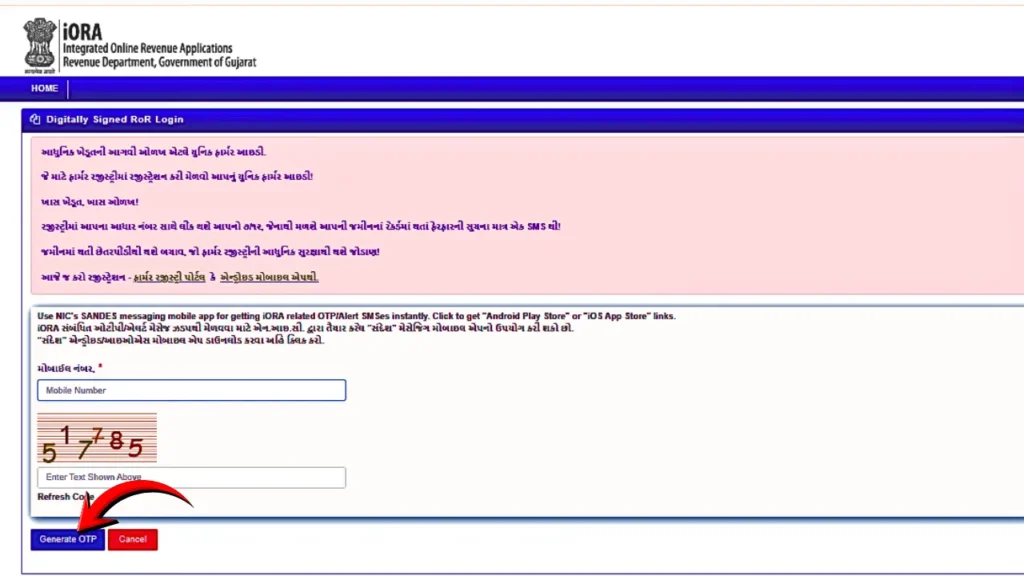
- Select your land details by choosing district, taluka, village, and survey number.
- Click on the download option to get your digitally signed RoR document.
This copy can be used for:
- Bank loans
- Property registration
- Court cases
- Legal verification
How Government Users Login (SSOI Access)
- Visit the official website: https://anyror.gujarat.gov.in/
- Select “Office Login (SSOI)” from the homepage to allow authorized government officials to securely access the revenue administration dashboard and manage land record services.

- Enter your assigned username and password.
- Complete the captcha verification.
- Click on Login to access the dashboard.
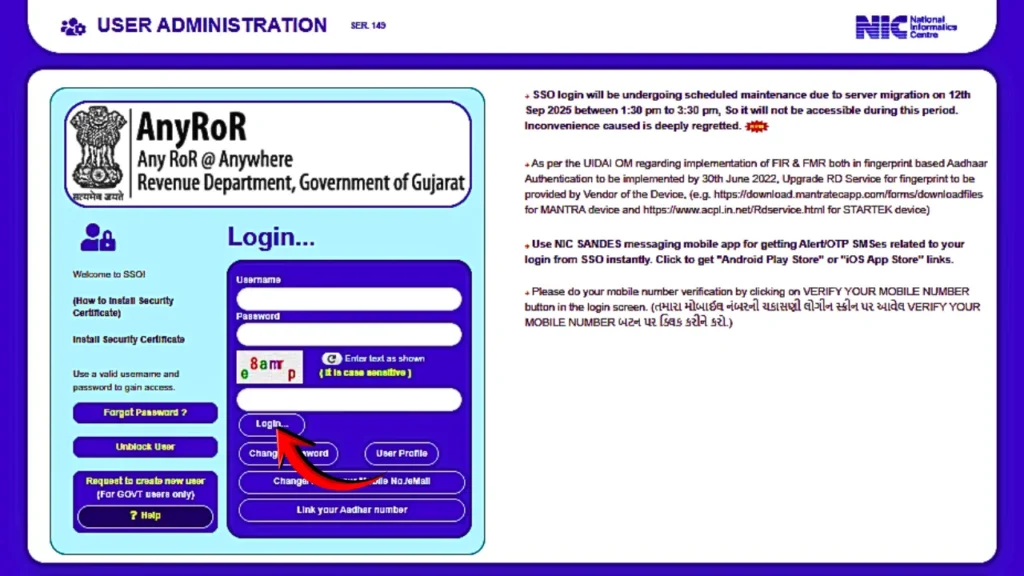
This login is only for authorized government staff of the Revenue Department. Through SSOI access, officials can:
- Approve or update mutation entries
- Manage land record data
- Reset passwords and unblock accounts
- Handle administrative and revenue-related tasks
This section is not meant for public users and requires official credentials.
How to Search Property Records (IGR Search)
- Visit the official website: https://anyror.gujarat.gov.in/
- Select “Property Search” from the homepage to check registered property details using the owner’s name, survey number, or document number.

- Choose your preferred search option:
- Property Wise Search
- Name Wise Search
- Document Number Search
- Enter the required details such as district, registration office, name, survey number, or document number.
- Click on “Send Verification” to receive an OTP on your registered mobile number (if required).

- Enter the OTP to verify your request.
- After verification, click on “Search” to view the registered property details.
- If available, you can also download the scanned copy of the registered document.
This service is helpful for verifying registered sale deeds, checking ownership history, and confirming past property transactions before buying land or property.
To download your digitally signed Record of Rights (RoR), visit the official AnyRoR Gujarat portal and complete the OTP verification process. For a complete walkthrough of the portal and its features, read our IORA Gujarat Online guide.
Final Words
The AnyRoR Gujarat has completely changed the way land records are accessed in Gujarat. What once required multiple visits to revenue offices can now be done online in just a few minutes. From checking 7/12 Utara and VF mutation entries to viewing urban property cards and downloading digitally signed RoR copies, the entire process has become simple, transparent, and convenient.
Whether you are a farmer verifying agricultural land details, a property buyer confirming ownership before purchase, a seller ensuring records are clear, or a legal professional handling land matters, the portal provides everything in one secure place. Services like property search, mutation status tracking, e-Chavdi records, and digitally signed documents help reduce fraud and improve trust in property transactions.